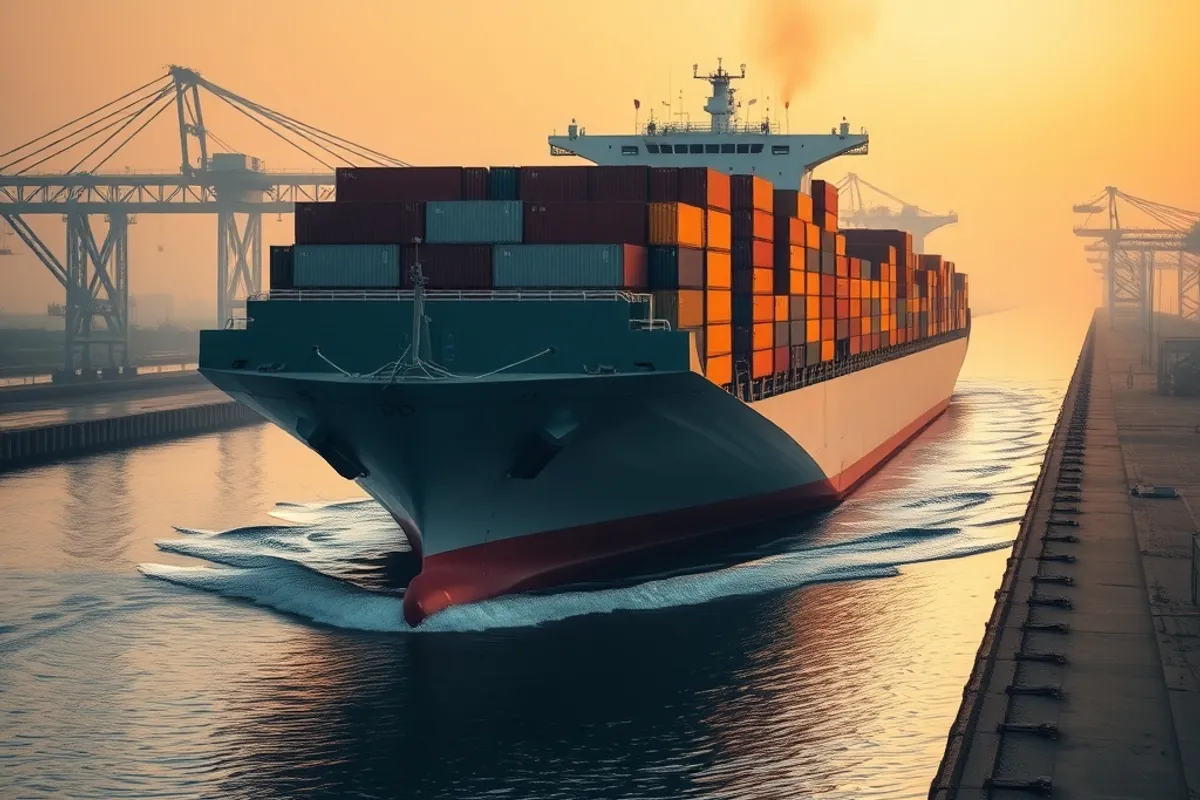
Most consumers never think about the sea lanes that carry their goods, until a delivery date slips or a price jumps. In 2026, those lanes are being reconsidered at a pace not seen in a generation.
Drought restrictions, security risks and a steady push to shorten supply chains have pushed shippers to test alternatives that once looked too expensive. The result is not a single new route but a patchwork of backups, each with its own cost and delay.
Key facts
- Chokepoints such as canals and narrow straits still carry a huge share of global goods.
- Drought and low water levels can cut capacity without any headline disaster.
- Nearshoring shortens routes but rarely removes dependence on imported parts.
- Freight rates react to uncertainty long before goods actually run late.
Contents
- Why trade routes are being reconsidered
- The chokepoints that carry the world’s goods
- Nearshoring and the shorter supply chain
- Ports, rail and the inland bottleneck
- What climate risk means for shipping
- Cost, speed and the new arithmetic
- What to watch over the next year
Why trade routes are being reconsidered
For three decades, global shipping optimised for one variable: cost. Goods moved through the cheapest available corridor, and redundancy was treated as waste. That arithmetic has changed.
Companies now price in disruption. A route that saves a few days but depends on a single canal, a single port or a single border crossing carries a risk premium that boards are no longer willing to ignore. You can see the same logic in our guide to reading price data, where transport costs appear long before they reach a shop shelf.
The chokepoints that carry the world’s goods
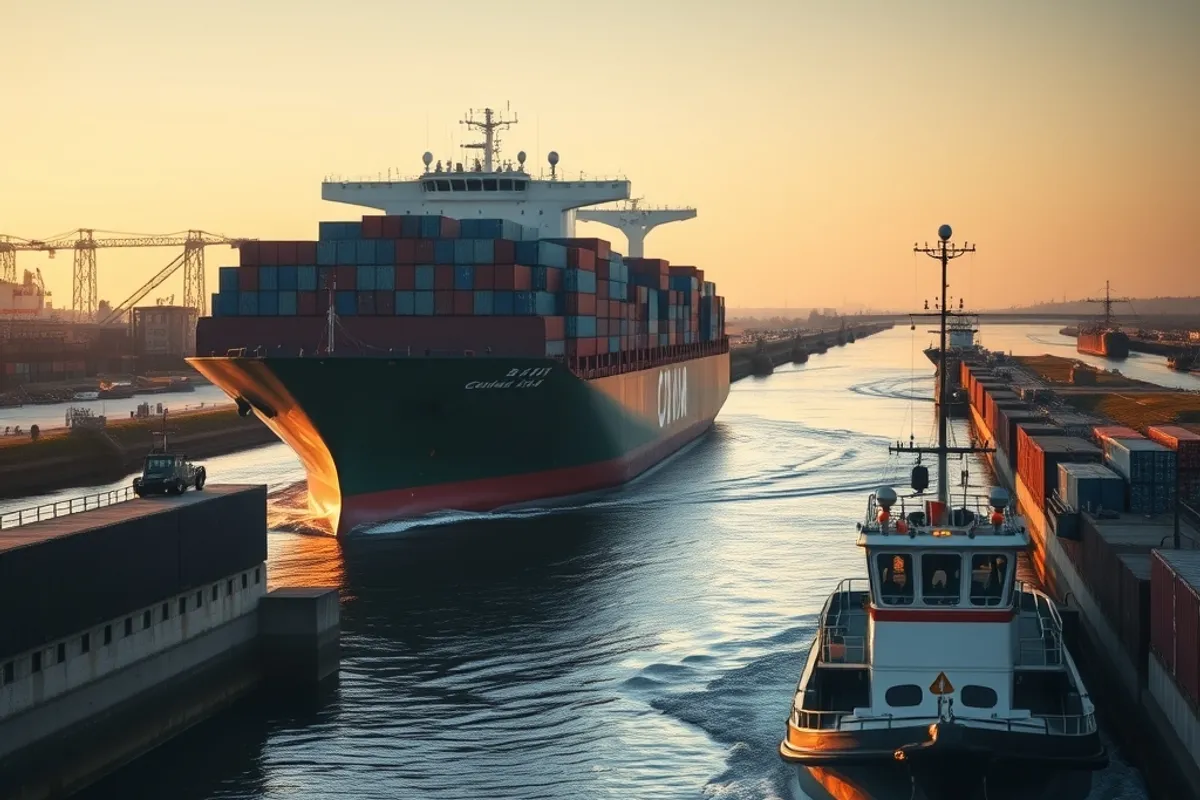
A handful of narrow passages do most of the work. Canals in Egypt and Central America, straits in Southeast Asia and the Middle East, and the approaches to major ports all act as valves. When one narrows, the pressure spreads across the network.
What matters is not only the volume but the lack of substitutes. A detour around a blocked canal can add a week or more, and the extra fuel and crew time is passed along the chain. Shippers call this a schedule problem. Buyers experience it as an empty shelf.
Nearshoring and the shorter supply chain
Nearshoring moves final assembly closer to the customer, often to a neighbouring country or region. It reduces exposure to long ocean crossings and makes it easier to adjust production when demand shifts.
It does not, however, create a self-contained supply chain. Components, machines and specialist materials still cross borders, sometimes several times. A factory that moves closer may still depend on a supplier half a world away, which is why companies now map tiers of suppliers rather than only direct vendors. Our report on local news finds a similar pattern: proximity builds resilience, but not isolation.

Ports, rail and the inland bottleneck
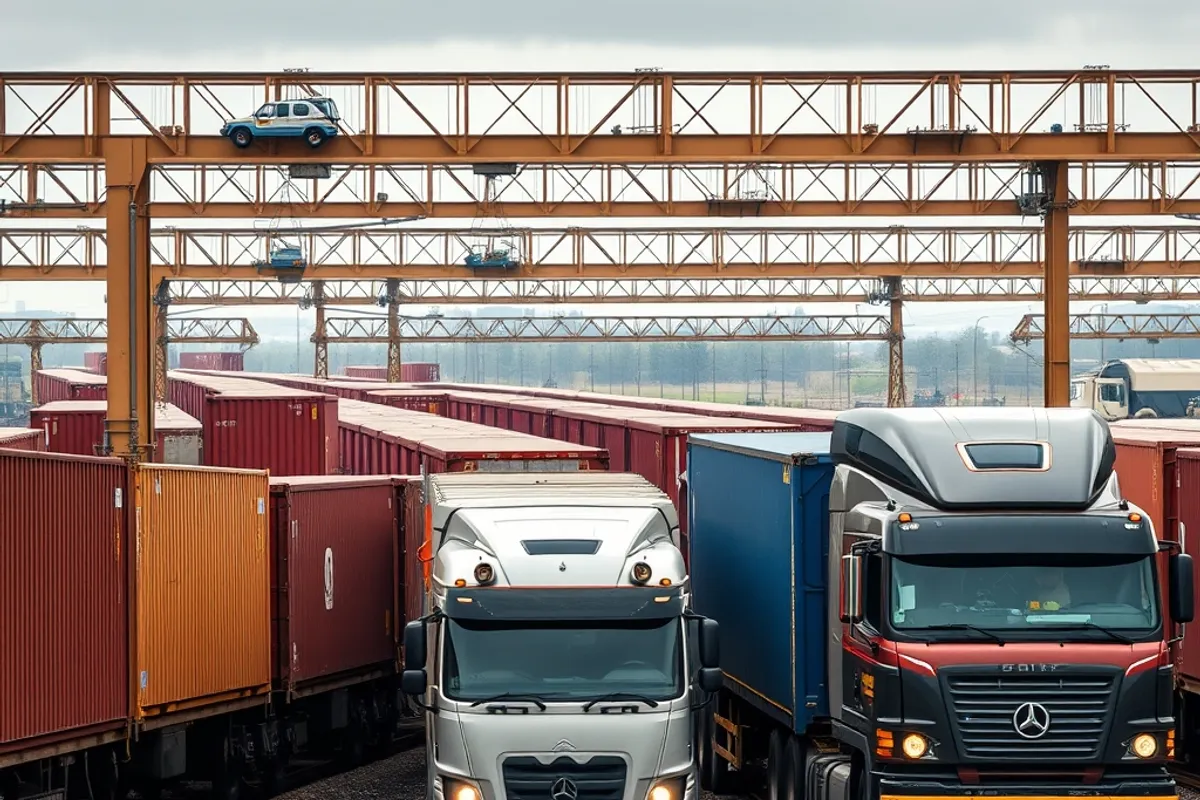
Ocean transit gets the attention, but the inland leg often decides whether a shipment arrives on time. Port congestion, rail capacity and truck availability can add days after the ship has already docked.
Ports that invested in rail connections and digital booking systems are recovering faster from surges. Others remain dependent on road haulage and limited warehouse space, which makes them fragile during seasonal peaks. For importers, the practical lesson is to audit the whole journey, not just the sea leg.
A trade route is not a line on a map. It is a promise about time, and time is the first thing to break.
What climate risk means for shipping
Low water levels, stronger storms and extreme heat are no longer abstract risks for transport planners. Drought can force vessels to carry less cargo to stay within depth limits, which quietly reduces capacity across an entire corridor.
Heat affects rail tracks, roads and airport operations as well as ports. The response is a mix of engineering, scheduling and insurance. None of it is free. Over time, climate adaptation becomes part of the base cost of moving goods, and that cost is shared by everyone in the chain.
Cost, speed and the new arithmetic
Shippers used to choose between cheap and fast. In 2026 they increasingly choose between predictable and uncertain. A slightly higher rate on a reliable route can be cheaper than a low rate that risks a missed season or a stalled factory.
That shift favours ports and carriers that publish clear schedules and communicate early when things go wrong. It also creates openings for smaller regional operators that can offer direct services and closer customer contact. The market is not abandoning global trade. It is pricing reliability properly for the first time in years.
What to watch over the next year
Watch water levels at major canals, labour negotiations at large ports, and the pace of new rail links serving inland distribution centres. Each is a leading indicator for delivery times and freight costs.
Also watch how companies report supplier risk. When firms start disclosing second-tier dependencies, it usually means they have already been burned once. For households, the practical takeaway is simple: a diversified supply chain is slower to panic, and that stability eventually shows up in prices.