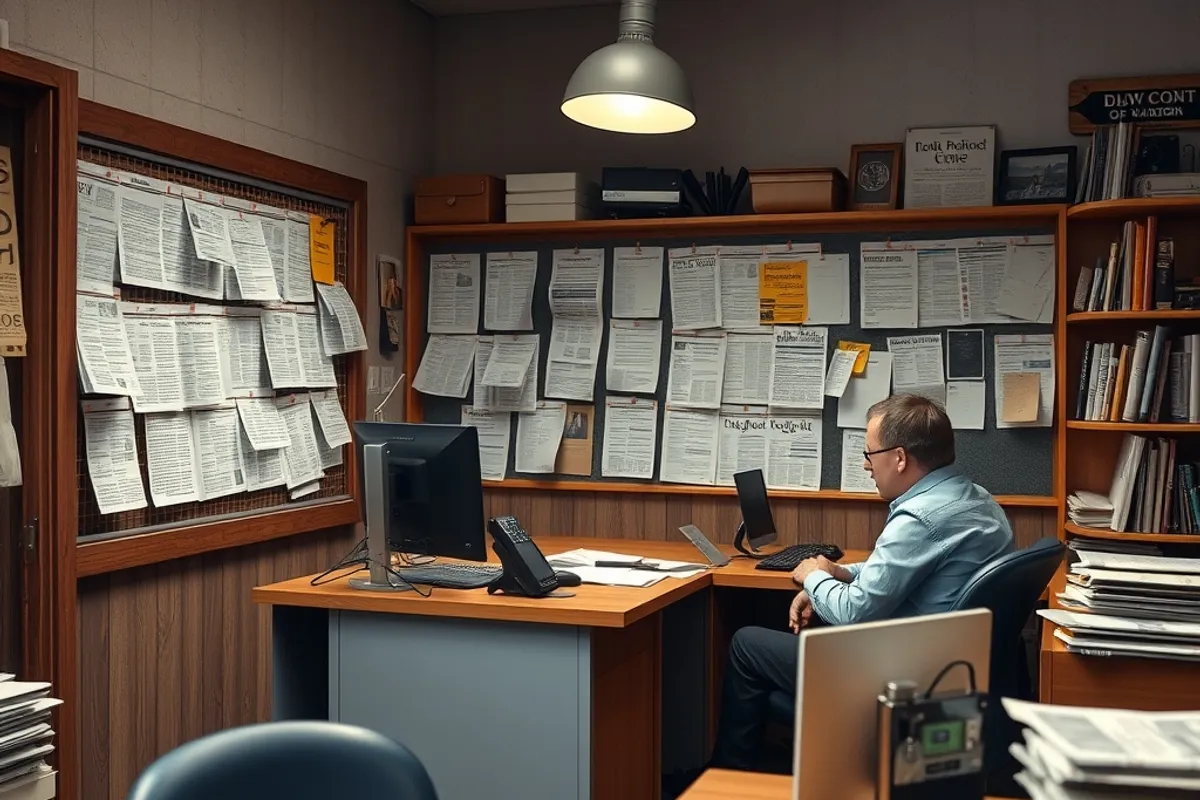
When a local newspaper closes, the effects are rarely immediate. Council meetings go unreported, planning decisions pass unnoticed, and residents lose a shared place to argue about the things that affect them most.
In the past few years, a new generation of local outlets has begun to fill that gap. They are smaller than the papers they replace, often digital-first, and funded by a mix of memberships, grants and events.
Key facts
- Local outlets often survive on memberships rather than advertising.
- Council and planning coverage is among the most valued local reporting.
- Small newsrooms reach audiences through newsletters and messaging apps.
- Funding remains the biggest constraint on growth and stability.
Contents
- What was lost
- The new local outlets
- Membership and micro-donations
- Covering council meetings again
- Trust starts at street level
- The business model problem
- What comes next
What was lost
The closure of a local paper removes more than a source of news. It removes a routine of accountability. Public bodies know that fewer people are watching, and the cost of a bad decision falls.
Research on local news deserts has linked the loss of coverage to lower civic participation and higher municipal borrowing costs. Correlation is not causation, but the pattern is consistent across regions.

The new local outlets
Most new local outlets are small by design. A team of two or three reporters can cover a city council, a school board and a handful of neighbourhoods with focus that larger organisations struggle to maintain.
They tend to publish newsletters rather than daily websites, and they often partner with community groups for distribution. That lowers costs and builds a direct relationship with readers who feel ownership of the coverage.
Membership and micro-donations
Membership replaces the old bundle of advertising and subscriptions. Readers pay a modest monthly amount because they value the coverage, not because a paywall blocks them.
The model works best when the outlet is transparent about its funding and its decisions. Members want to know that their money supports reporting, not a sales team. Events and local sponsorships add revenue without compromising coverage, if the rules are clear.

Covering council meetings again
Council meetings are the backbone of local accountability. They are also long, procedural and easy to ignore. New outlets often cover them with a mix of live posts, short summaries and follow-up explainers.
The key is consistency. A single dramatic meeting is less valuable than showing up every month and noticing when a budget line quietly changes. That kind of coverage builds trust because readers can see the record over time.

National news tells you what to think about. Local news tells you where to stand.
Trust starts at street level
National media often arrives with a frame already set. Local reporters live with the consequences of their stories, which changes the tone. They are more likely to explain a decision than to turn it into a national symbol.
That proximity does not guarantee accuracy, but it creates accountability. Readers can call the reporter, attend the meeting and check the documents themselves. Our fact-checking guide explains how that verification process should work.
The business model problem
Membership revenue is stable but rarely large. Many local outlets depend on philanthropic grants that expire, and few have built enough reserves to survive a downturn.
Advertising has not disappeared, but it has moved to platforms that do not fund journalism. Some outlets experiment with sponsored events and local business directories. The risk is that commercial pressure slowly reshapes coverage, especially in small markets.

What comes next
The likely future is a patchwork: some cities with strong local outlets, others with almost none. Philanthropy and public funding can narrow that gap, but they raise questions about independence and accountability.
For readers, the practical choice is simple. If local coverage matters, pay for it, read it and hold it to account. A newsroom that nobody funds eventually becomes a newsroom that nobody has. For a wider view of how information spreads, see our short video analysis.